Scientific Journal of Genetics and Gene Therapy
Transposable Elements in Fungi: A Genomic Approach
Laboratório de Genética Molecular e de Micro-organismo, Universidade Federal de Viçosa, Viçosa, Brazil
Author and article information
Cite this as
Santana MF, Queiroz MV (2015) Transposable Elements in Fungi: A Genomic Approach. Scientific J Genet Gene Ther. 2015; 1(1): 12-16. Available from: 10.17352/sjggt.000003
Copyright License
© 2015 Santana MF, et al. This is an open-access article distributed under the terms of the Creative Commons Attribution License, which permits unrestricted use, distribution, and reproduction in any medium, provided the original author and source are credited.Transposable elements (TEs) include a wide range of DNA sequences that can change positions in the genome. The accessibility of whole fungal genome sequences and analysis of TEs demonstrate the important role they play in genome evolution of fungi species. TE activity is a primary mechanism for high fitness, plasticity and adaptability in certain species of pathogenic fungi. Some of the deleterious effects of transposons may be due to ectopic recombination among transposons of the same family. To prevent possible damage caused by the transposons, some fungi possess TE-silencing mechanisms, for instance, RIP (Repeat Induced Pont mutation) and RNA silencing. In addition, TEs are efficient molecular markers due to their structure and transposition strategy.
The availability of fungal genomes has led to the elucidation of the number and distribution of transposable elements (TEs) in several species of fungi. TEs are moderately repetitive DNA sequences dispersed throughout the genome. Such elements can move from one site to another within the genome, and their insertion can produce a broad spectrum of host mutations [1].
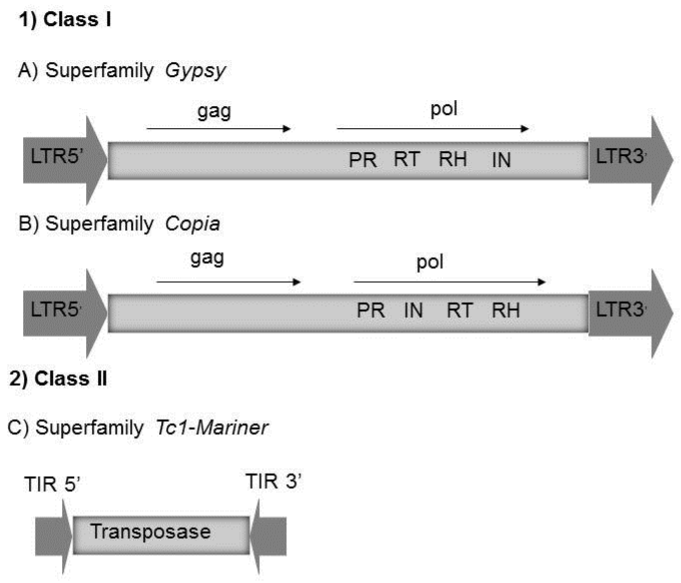
Transposable elements are hierarchically classified into class, subclass, order, superfamily, family and subfamily. There are two classes of TEs that differ in the presence (class I) or absence (class II) of an RNA intermediate. Class I TEs transpose via an RNA intermediate that is transcribed from a single copy of the genome and produces a cDNA via reverse transcription, which is encoded by the element itself. Class I have two major subclasses, the LTR (Long Terminal Repeat) retrotransposons and the non-LTR retrotransposons (LINEs, Long Interspersed Nuclear Elements, and SINEs, Short Interspersed Nuclear Elements), which are distinguished mainly by the respective presence or absence of LTRs at their ends. The class II TEs are divided into two subclasses. Subclass1 are TEs that are transposed by integration and excision mechanisms and subclass 2 are TEs that duplicate before insertion. Subclass 1 contains two orders; the most wellknown is the TIR (Terminal Inverted Repeated) order. This order contains nine superfamilies: Tc1-Mariner, Mutator, hAT, Merlin, Transib, P, PIF/Harbinger, CACTA and Crypton. Subclass 2 has two orders: Helitron and Maverick. Furthermore, there are groups of non-autonomous TEs that lack one or more of the genes essential for transposition, including MITEs (Miniature Inverted-repeat Terminal Elements) for class II, SINEs for non-LTR retrotransposons, and TRIM retrotransposons (Terminal-repeat Retrotransposon In Miniature) and LARDs (Large Retrotransposon Derivates) for LTR retrotransposons [2].
Copies or remnants of both class I (retrotransposons) and class II (DNA transposons) have been identified, and the number of distinct mobile elements continues to grow. Such repeated sequences vary in number as well as in size, and comprise 3 to 20% of the sequenced genome of most fungi. In contrast, the plant pathogenic fungus Blumeria graminis has a genome estimated at 174 Mb, and 85% of the genome includes TEs [3]. More than 215 genus-specific TEs were found in Laccaria bicolor in addition to many remaining degenerate copies. Additionally, 40 different TE families were detected in the genome of L. bicolor, and less than 5% nucleotide mutations had accumulated, which suggest that they are recently acquired elements, and possible activities can be inferred for such elements [4]. In general, the most abundant TEs in sequenced genomes of fungi are Gypsy, Copia and Tc1-Mariner (Figure 1).
Since their discovery during the late 1940s by Barbara McClintock [5], the importance of TEs in genome structuring and evolution becomes increasingly clear due to the completion of several genome sequencing projects. Some of the effects of transposable elements may be due to ectopic recombination among elements of the same family. Ectopic recombination occurs between homologous DNA sequences on different chromosomes. An analysis of TEs distributed across the Magnaporthe grisea genome has demonstrated extensive past ectopic recombination events. Thus, ectopic recombination events can aid in fitness because many host-specific genes are in transposable element-rich regions. Therefore, recombination events delete or alter the structure of such genes, which consequently alters their expression [6]. In Coprinus cinereus, the elements are in regions with medium and high recombination rates [7].
Certain species-specific genomic islands in Aspergillus fumigatus include a disproportionate number of TEs compared with syntenic areas, which may be involved in origination or modification of such areas. These areas include genes involved in carbohydrate transport and catabolism, secondary metabolite biosynthesis and detoxification. Lineage specific (LS) genes are a key point in many comparative genomics studies because such regions may be responsible for phenotypic differences between species and reflect different capacities for niche exploitation [8]. Similarly, numerous (potentially related) multi-copy retrotransposons have been identified in Phanerochaete chrysosporium that affect expression of genes related to lignin degradation. Retrotransposons interrupt the gene sequence for putative members of the cytochrome P450 gene family and multicopper oxidase mco3 genes. An additional element was found 100 bp upstream of the peroxidase gene. The intact coding regions for such elements suggest a recent transposition event [9].
Transposable elements are important for generating fungal variability and increased fitness in the environment. Transposition in response to environmental stress was proposed as an adaptive genomic response. Such stresses may be abiotic (temperature, irradiation and oxidative stress) or biotic, such as pathogen infection. TE activity in fungi under stressful conditions has been demonstrated in Aspergillus oryzae [10], Ophiostoma novo-ulmi [11], Moniliophthora perniciosa [12] and Magnaporthe oryzae [13].
Transposable elements in plant pathogenic fungi
Effectors are considered to be small secreted proteins that target and inhibit specific physiological processes involved in plant defense and enhance pathogen virulence without causing a general debilitation of cellular metabolism or cell death [1]. Many effector genes in several plant pathogens have been found embedded in genomic regions with many repeats and TEs [14]. Through studying the avirulence gene of M. oryzae AVR-Pita gene, Khang et al. [15], Chuma et al. [16] found that such genes are associated with various types of TEs. The activity of such elements and rearrangements caused by recombination can produce deletion, duplication, inversion and translocation. Certain changes may alter AVR gene structure or expression, thereby promoting the emergence of novel pathogen races.
Unique sequences involved in pathogenicity were discovered in the Fusarium oxysporum genome. Notably, such regions compose 74% of the TEs identified in the Fusarium genome, including 95% of the DNA transposons that might be involved in gene duplication events. Of these elements, the pogo family is best represented with more than 500 identified copies [17]. The analysis of the Leptosphaeria maculans genome revealed the presence of effector genes in TE-rich genome environments that contribute to sequence diversification and probably adaptation to new hosts or better adaptation to the existing host. The presence of effector genes in such dynamic genome environments has a dual advantage for phytopathogens, immediate adaptation to new source of resistance and long-term enhanced ability to duplicate and diversify effector genes to facilitate adaptation to the host or adaptation to new hosts [18,19].
Silencing of transposable elements
Given the potential damage to genome stability caused by transposon movement, many organisms have developed defense systems that suppress TEs activity [20]. Two particular defense mechanisms have received the most attention: repeat induced point mutation (RIP) and RNA silencing [21]. RIP is a gene silencing mechanism that mutates repetitive DNA sequences during the sexual cycle between fertilization and nuclear fusion. RIP prevents accumulation of TEs in fungi. This mechanism may also be related to the gradual divergence of duplicated genes in Neurospora crassa, which is essential for the development of new genes with novel functions [22]. In general, RIP induces GC to AT mutations in duplicate DNA sequences that are longer than 400 bp with greater than 80% identity [23]. Cytosine methylation is often associated with RIP mutations, and the methyltransferase (RID) is responsible for such methylation events in N. crassa [24].
Experimental observation of RIP requires a fungal species cultured under laboratory conditions and lineage transformation. However, processes similar to RIP can also be detected through in silico analyses for repeated elements in the genome using a software (RIPCAL ) that can align repeated regions and analyze changes in dinucleotides frequencies related to RIP-like events [25]. Two indices, TpA/ApT and (CpA + TpG)/(ApC + GpT), are commonly used for in silico RIP detection. The TpA/ApT index is simple and measures RIP product frequency, TpA, with a tendency for false positives due to A:T rich regions. High TpA/ApT values indicate a strong RIP response. The (CpA + TpG)/(ApC + GpT) index is similar to TpA/ApT in principle, but it measures depletion of the RIP targets CpA and TpG. In this case, low (CpA + TpG)/(ApC + GpT) values strongly suggest RIP. Additional RIP indices can be defined as (CpN + NpG)/(TpN + NpA), which represents the rate of pre-RIP to post-RIP dinucleotide conversion for the characteristic dinucleotide mutation CpN to TpN and the reverse complement NpG to NpA [25]. A complementary method to the analysis of dinucleotide preference rations, developed by Bouvet et al. [26], can be utilized also. The method, called cumulative transition score (CTS), adds a visual component to analysis of RIPed sequences.
RIP is highly frequent in N. crassa, where no intact TE was found because a single pass through the sexual cycle causes mutations in up to 30% of CG pairs in duplicate sequences [27]. Alternatively, such mutations may have a low efficiency as in Podospora anserina [28] or be absent. Through sequencing of entire fungal genomes, RIP-like processes have among others also been detected in P. anserina [28], Stagonospora nodorum [29], M. grisea [6] and Mycosphaerella fijiensis [30], Cochliobolus heterostrophus [31], and Mycosphaerella graminicola [33]. However, differences in the intensity with which RIP acts between different transposons, within the same genome, have been reported [33,34].
Despite t he in silico evidence of RIP in a wide range of fungi [35], the actual mechanism of RIP is still uncertain. For instance, the importance of the RID proteins for RIP in N. crassa was confirmed experimentally [24], but remains unclear in others fungi. In O. novo-ulmi and others related fungi, the RIP mechanism has been evidenced, but the RID gene does not appear to be present in the genome assembly [36]. The authors suggested three possible explanations: a recent loss of RIP function, an unidentified functional analog of RID maintaining RIP function or the RID gene may be present in the small assembly gaps. In fact, in many genomes where RIP was evidenced, the search for RID genes was neglected. Thus, new searches by RID gene in genomes with evidence of RIP and experimental observations of RIP under laboratory conditions should be performed.
Another mechanism used to defend the genome against invasive DNA is RNA silencing or quelling, which was discovered in N. crassa [37]. Duplicate sequences are silenced during the vegetative growth phase, and the process requires an approximately 132 bp long homologous regions. This phenomenon involves the repression of translation of sequences similar to small RNA molecules [21]. The phenomenon has been reported in different organisms under various names, quelling in N. crassa [38], cosuppression in plants [39] and RNA interference in Caenorhabditis elegans [40]. The machinery required for this process, which includes Argonaut, Dicer, and helicases, is conserved in most species where the process has been studied [41].
N. crassa has another silencing mechanism, MSUD (meiotic silencing by unpaired DNA), which is triggered by non-pairing genes on parental chromosomes during meiotic events [42]. The high number of defense mechanisms against TEs and the role of such elements in structuring the N. crassa genome produce a complex paradigm. This fungal species has an efficient defense against TEs activity, but cannot benefit from such activity, by means of gene duplication, regulation and genetic diversity amplification [27].
Transposable elements as molecular markers
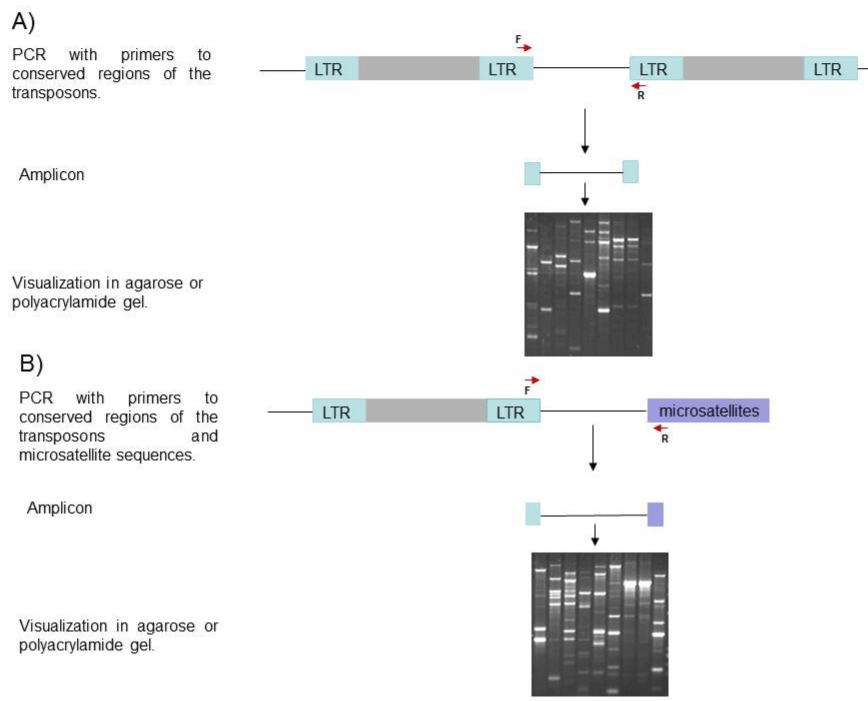
In addition to an important role in genome evolution, TEs have a broad applicability as a molecular marker system due to their ubiquity, abundance and dispersion throughout the genome and conserved regions [43]. In many species, markers based on TEs can be successfully used to study genetic diversity and variability, such as SSAP (sequence-specific amplified polymorphism) used in Fusarium oxysporum [44], REMAP (retrotransposon-microsatellite amplified polymorphism) in mushroom species [45] and IRAP (inter-retrotransposon amplified polymorphism) in M. fijiensis [46]. IRAP and REMAP are exceptional TE markers because they are simple and efficient systems that require only one PCR experiment followed by electrophoresis to resolve the products (Figure 2). IRAP and REMAP examine polymorphisms in regions where retrotransposons are inserted; IRAP studies polymorphisms between retrotransposons, whereas REMAP is used for the analysis of polymorphisms between retrotransposons and microsatellites (SSR - single sequence repeat). Both techniques use primers designed against conserved retrotransposon regions, such as LTRs. For IRAP, the primer pairs anneal to known and conserved retrotransposon regions. In REMAP, one primer that anneals to an LTR is used in combination with primers designed to anneal to SSRs, thereby detecting retrotransposon insertions near SSRs [47]. Polymorphisms are detected through presence or absence of loci. The absence of a band indicates the absence of a retrotransposon at a particular locus. Thus, the presence or absence of the TE at a given locus can be used as a marker to study diversity [48].
Conclusions
The availability of fungal genomes has facilitated the identification and characterization of TEs, which have generated important information on transposition mechanisms, such as activation of such these elements, their horizontal and vertical distribution, gene silencing, host genome organization and evolution, insertion of such elements into gene regulatory networks, as well as utilization of such elements as molecular markers. TEs likely play a strong role in evolution, especially for plant pathogenic fungi, because the activity of transposons and rearrangements can potentially alter gene structure or expression and, therefore, facilitate to the emergence of new pathogen races.
- Grandaubert J, Balesdent M-H, Rouxel T (2014) Evolutionary and adaptive role of transposable elements in fungal genomes. In: Advances in Botanical Research Editor Francis Martin 70: 79-107 .
- Wicker T, Sabot F, Huan-Van A, Bennetzen JL, Capy P, et al. (2007) A unified classification system for eukaryotic transposable elements. Nat Rev Genet 8: 973-982 .
- Parlange F, Oberhaensli S, Breen J, Platzer M, Taudien S, et al. (2011) A major invasion of transposable elements accounts for the large size of the Blumeria graminis f.sp. tritici genome. Funct Integr Genomics 11: 671-677 .
- Martin F, Aerts A, Ahre´n D, Brun A, Danchin EGJ, et al. (2008)The genome of Laccaria bicolor provides insights into mycorrhizal symbiosis. Nature 452: 88-92 .
- McClintock B (1950)The origin and behavior of mutable loci in maize. Proc Natl Acad Sci 36: 344-355 .
- Dean RA, Talbot NJ, Ebbole DJ, Farman ML, Mitchell TK et al. (2005) The genome sequence of the rice blast fungus Magnaporthegrisea. Nature 434: 980-986 .
- Stajich JE, Wilke SK, Ahrén D, Au CH, Birren BW, et al. (2010) Insights into evolution of multicellular fungi from the assembled chromosomes of the mushroom Coprinopsiscinerea (Coprinuscinereus) . Proc Natl Aca dSci USA 107: 11889-11894 .
- Fedorova ND, Khaldi N, Joardar VS, Maiti R, Amedeo P, et al. (2008)Genomic islands in the pathogenic filamentous fungus Aspergillusfumigatus. PLoS Genet 4: e1000046 .
- Martinez D, Larrondo LF, Putnam N, Gelpke MDS, Huang K, et al. (2004) Genome sequence of lignocellulose degrading fungus Phanerochaetechrysosporium strain RP78. Nature Biotechnol 22: 695-700 .
- Ogasawara H, Obata H, Hata Y, Takahashi S, Gomi K (2009) Crawler, a novel Tc1/mariner-type transposable element in Aspergillusoryzae transposes under stress conditions. Fungal Genet Biol 46: 441-449 .
- Bouvet GF, Jacobi V, Plourde KV, Bernier L (2008) Stress-induced mobility of OPHIO1 and OPHIO2, DNA transposons of the Dutch elm disease fungi. Fungal Genet Biol 45: 565-578 .
- Pereira JF, Almeida APMM, Cota J, Pamphile JA, Silva GF, et al. (2013) Boto, a class II transposons in Moniliophthoraperniciosa, is the first representative of the PIF/Harbinger superfamily in a phytopathogenic fungus. Microbiology 159: 112-125 .
- Chadha S, Sharma M (2014) Transposable elements as stress adaptive induce genomic instability in fungal pathogen Magnaportheoryzae. Plos One 9: e94415 .
- Bakkeren G, Valent B (2014) Do pathogen effectors play peek-a-boo? Front Plant Sci 5: 1-2 .
- Khang CH, Park S-Y, Lee Y-H, Valent B, Kang S (2008) Genome Organization and evolution of the AVR-Pita avirulence gene family in the Magnaporthegrisea species complex. Mol Plant Microbe Interact 21: 658-670 .
- Chuma I, Isobe C, Hotta Y, Ibaragi K, Futamata N, et al. (2011)Multiple translocation of the AVR-Pita effector gene among chromosomes of the rice blast fungus Magnaportheoryzae and related species. Plos Pathog 7: e1002147 .
- Ma L-J, van der Does HC, Borkovich KA, Coleman JJ, Daboussi M-J et al. (2010) Comparative genomics reveals mobile pathogenicity chromosomes in Fusarium. Nature 464: 367-373 .
- Grandaubert J, Lowe RGT, Soyer JL, Shoch CL, Wouw APV, et al. (2014) Transposable element-assisted evolution and adaptation to host plant within the Leptosphaeriamaculans-Leptosphaeriabiglobosa species complex of fungal pathogens. BMC Genomics 15: 891 .
- Wollenberg T, Schirawski J (2014) Comparative genomics of plant fungal pathogens: the Ustilago- Sporisorium paradigm. Plos Pathog 10: e1004218 .
- Lovsin N, Gubensek F, Kordis D (2001) Evolutionary dynamics in a novel L2 clade of non-LTR retrotransposons in Deuterostomia. Mol Biol Evol18: 2213–2224 .
- Galagan JE, Henn MR, Ma LJ, Cuomo CA, Birren B (2005) Genomics of the fungal kingdom: Insights into eukaryotic biology. Genome Res 15: 1620-1631 .
- Galagan EJ, Selker EU (2004) Rip: the evolutionary cost of genome defense. Trends Genet 20: 417-423 .
- Novikova OS, Fet V, Vlinov AG (2007) Homology-dependent inactivation of LTR retrotransposons in Aspergillusfumigatus and Aspergillusnidulans genome. Mol Biol 41: 886-893 .
- Freitag M, Williams RL, Kothe GO, Selker EU (2002) A cytosine methyltransferase homologue is essential for repeat-induced point mutation in Neurosporacrassa . Proc Natl Acad Sci USA 99: 8802-8807 .
- Hane JK, Oliver RP (2008)RIPCAl: a tool for alignment-based analyses of repeat-induced point mutations in fungal genomic sequences. BMC Bioinformatics 9: 478 .
- Bouvet GF, Jacobi V, Bernier L (2007) Characterization of three DNA transposons in the Dutch elm disease fungi and evidence of repeat-induced point (RIP) mutations. Fungal Genet Biol 44: 430-443 .
- Galagan JE, Calvo SE, Borkovich KA,Selker EU, Read ND, et al. (2003) The genome sequence of the filamentous fungus Neurosporacrassa. Nature 422: 859-868 .
- Espagne E, Lespinet O, Malagnac F,Silva C, Jaillon O, et al. (2008)The genome sequence of the model ascomycete fungus Podospora anserine. Genome Biol 9: R77 .
- Hane JK,Lowe RGT, Solomon PS, Tan KC, Schoch CL, et al. (2007)Dothideomycete–plant interactions illuminated by genome sequencing and EST analysis of the wheat pathogen Stagonosporanodorum. Plant Cell 19: 3347-3368 .
- Santana MF, Silva JCF, Batista AD, Ribeiro LE, Silva GF, et al. (2012)Abundance, distribution and potential impact of transposable elements in the genome of Mycosphaerellafijiensis. BMC Genomics 13:720 .
- Santana MF, Silva JCF, Mizubuti ESG, Araújo EF, Condon BJ, et al. (2014) Characterization and potential evolutionary impact of transposable elements in the genome of Cochliobolusheterostrophus. BMC Genomics15: 536 .
- Dhillon B, Gill N, Hamelin RC, Goodwin (SB 2014) The landscape of transposable elements in the finished genome of the fungal wheat pathogen Mycosphaerellagraminicola. BMC Genomics 15:1132 .
- Santana MF, Silva JCF, Mizubuti ESG, Araújo EF, Queiroz MV (2014)Analysis of Tc1-Mariner elements in Sclerotiniasclerotiorum suggest recent activity and flexible transposases. BMC Microbiology 14: 256 .
- Amselem J, Lebrun M-H, Quesneville H (2015) Whole genome comparative analysis of transposable elements provides new insight into mechanisms of their inactivation in fungal genomes. BMC Genomics 16: 141 .
- Clutterbuck AJ (2011) Genomic evidence of repeat-induced point (RIP) in filamentous ascomycetes. Fungal Genet Biol 48: 306-326 .
- Comeau AM, Dufour J, Bouvet GF, Jacobi V, Nigg M, et al. (2015) Functional annotation of the Ophiostoma novo-ulmi genome: insights into the phytopathogenicity of the fungal agent of Dutch elm disease. Genome Biol Evol 7: 410-430 .
- Romano N, Macino G (1992) Quelling: transient inactivation of gene expression in Neurosporacrassa by transformation with homologous sequences. Mol Microbiol 6: 3343–3353 .
- Cogoni C, Irelan JT, Shumacher M, Schmidhauser TJ, Seker EU, et al. (1996) Transgene silencing of the al-1 gene in vegetative cells of Neurospora is mediated by a cytoplasmic effector and does not depend on DNA-DNA interactions or DNA methylation. Embo J 15: 3153-3163 .
- Napoli C, Lemieux C, Jorgensen R (1990) Introduction of a chimeric chalcone synthase gene into petunia results in reversible co-suppression of homologous gene in trans. Plant Cell 2: 279-289 .
- Fire A, Xu S, Montgomery MK, Kosta SA, Driver SE, et al. (1998) Potent and specific genetic interference by double-stranded RNA in Caenorhabditiselegans. Nature 391:806-811 .
- Hutvagner GE, Zamore PD (2002)RNAi: Nature abhors a double-strand. Curr Opin Genet Dev 12: 225-232.
- Shiu PKT, Raju NB, Zickler D, Metzenberg RL (2001)Meiotic silencing by unpaired DNA. Cell 107: 905-916 .
- Schulman AH, Flavell AJ, Ellis TH (2004)The application of LTR retrotransposons as molecular markers in plants. Methods Mol Biol 260: 145–173 .
- Pasquali M, Saravanakumar D, Gullino ML, Garibaldi A (2008) Sequence-specific amplified polymorphism (SSAP) technique to analysis Fusariumoxysporum f. sp. lactucae VCG 0300 isolate from lettuce. J Plant Pathol 90: 527-535 .
- Le QV, Won H-K, Lee T-S, Lee C-Y, Lee H-S, et al. (2008) Retrotransposon microsatellite amplified polymorphism strain fingerprinting markers applicable to various mushroom species. Mycobiology 36: 161-166 .
- Queiroz CB, Santana MF, Silva GF, Mizubuti ESG, Araújo EF et al. (2014)Use of the IRAP marker to study genetic variability in Pseudocercosporafijiensis populations. Curr Microbiol 68: 358-364 .
- Kalendar R, Grob T, Regina M, Suoniemi A, Schulman A (1999) IRAP and REMAP: two new retrotransposon-based DNA fingerprinting techniques” Theor Appl Genet 98: 704-711 .
- Kalendar R, Schulman AH (2006) IRAP and REMAP for retrotransposon-based genotyping and fingerprinting. Nat Protoc 1: 2478-2484 .



 Save to Mendeley
Article Alerts
Subscribe to our articles alerts and stay tuned.
 This work is licensed under a Creative Commons Attribution 4.0 International License.